
The Holy Empire of Music
Last and First MenThis flow follows a Third Men’s musical revelation from peasant experience to global institution, religious schism, and destructive rule by engineered musical elites.
increasing Bearing strength in each event
 decreasing
Bearing strength in each eventdecreasingMusic as a Refuge
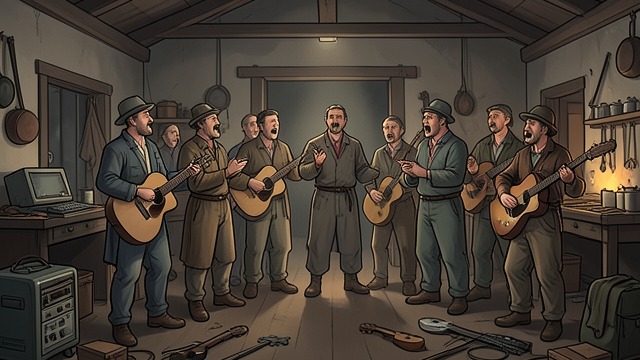
A Peasant Art
Shared experience
Groups of workers use songs and instruments to imagine a world more beautiful than daily hardship. Their musical experience offers intense emotion and a temporary sense of unity.
A new interpretation
The prophet recognizes this power and presents music as the deepest reality. His teaching gives ordinary listeners a way to understand their private experience as part of something universal.
The Prophet’s Doctrine
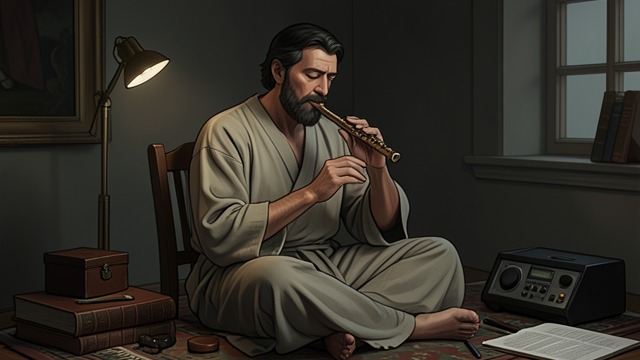
Souls as Melodies
A promise of continuance
The prophet teaches that individual bodies perish but musical souls belong to an eternal realm. Musical originality becomes a measure of a person’s standing beyond ordinary life.
Popular transformation
The doctrine spreads among peasants and unsettles established social distinctions. Persecution strengthens the movement by making its adherents’ songs a sign of courage.
The Holy Empire
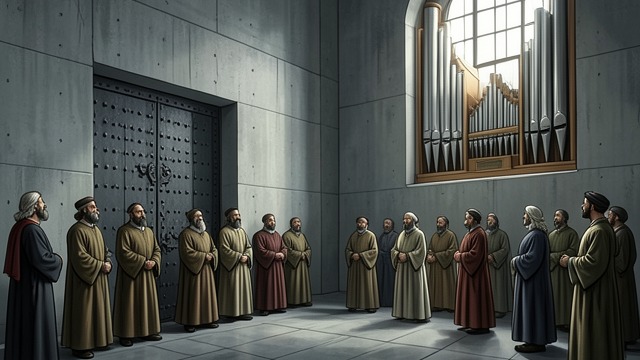
Harmony as Government
An imperial conversion
The monarch embraces the new faith and reorganizes society around its musical language. The state’s authority expands as the religion’s appeal crosses local boundaries.
Order through metaphor
The Universal Church of Harmony constructs a legal system that describes human needs and duties through musical ideas. The metaphor is fanciful, but the resulting institutions often work pragmatically.
The Prophet Imprisoned
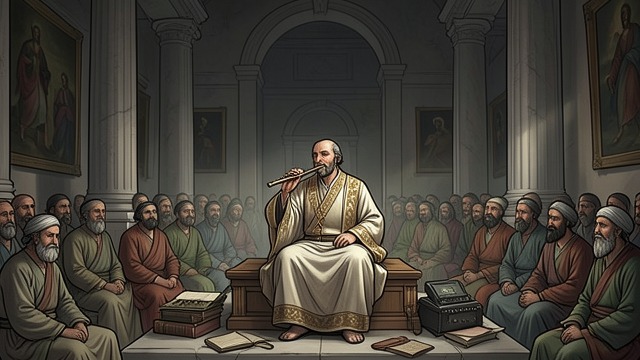
A Founder Made an Oracle
The state claims its creator
The ruler retrieves the prophet from his mountain retreat and installs him in the High Temple of Music. His independent artistic life is replaced by ceremonial use.
A voice extinguished
Official performance overwhelms him, and he becomes mad. The institution preserves his name while silencing the living judgment that had given the religion its force.
Schism and Musical Elites

From Revelation to Control
Competing doctrines
Reformers accuse the church of substituting technique for spiritual experience, while opponents reject private emotion in favor of formal musical rules. Both sides claim to defend the faith.
Breeding for music
A faction begins selecting for extreme musical sensitivity. The resulting specialists experience ordinary music as torment and become a dangerous ruling caste, helping drive society into conflict and collapse.
During an early musical awakening among the Third Men
As the musical movement spreads
At the movement’s political victory
During the first years of imperial rule
Near the end of the imperial millennium
